What Should Dermatology Leads Cost? How One Practice Achieved $27 Per Lead
Dermatology lead cost is one of the most common questions practice owners ask about Google Ads. Are you overpaying? Is there room to improve? Or is this just what patient acquisition costs these days? Here’s a real…

On This Page
Dermatology lead cost is one of the most common questions practice owners ask about Google Ads. Are you overpaying? Is there room to improve? Or is this just what patient acquisition costs these days?
Here’s a real benchmark: since January 2025, we have helped a Honolulu dermatology practice generate more than 1,500 confirmed booking requests at $27 per booking. No inflated phone-call counts, no form-fill fluff, just patients who took the concrete step of requesting an appointment. That practice is now one of the largest derm groups in Hawaii. Let me break down what drove that number and what it can tell you about your own campaigns.
What Drives Dermatology Lead Cost?
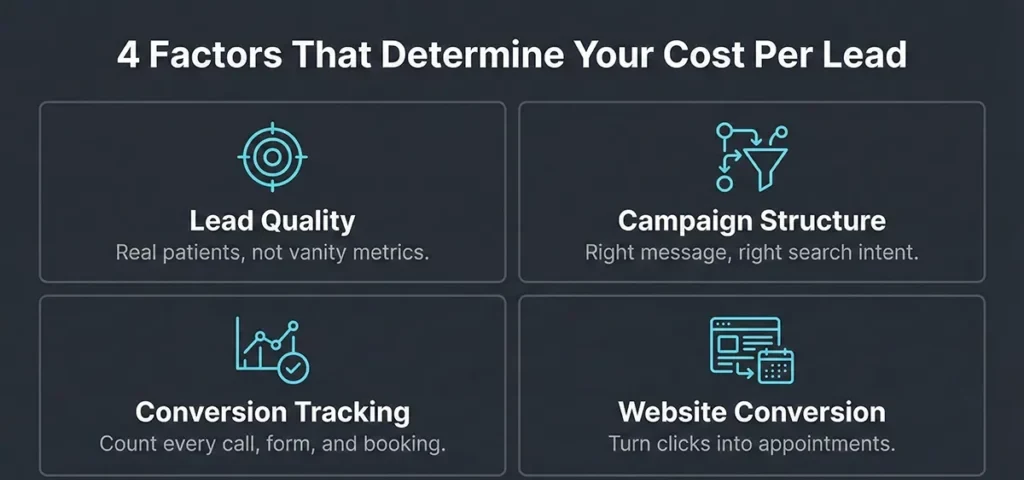
Before diving into the case study, it helps to understand what actually determines your cost per lead. It’s not just your budget or your bids. Four factors matter most:
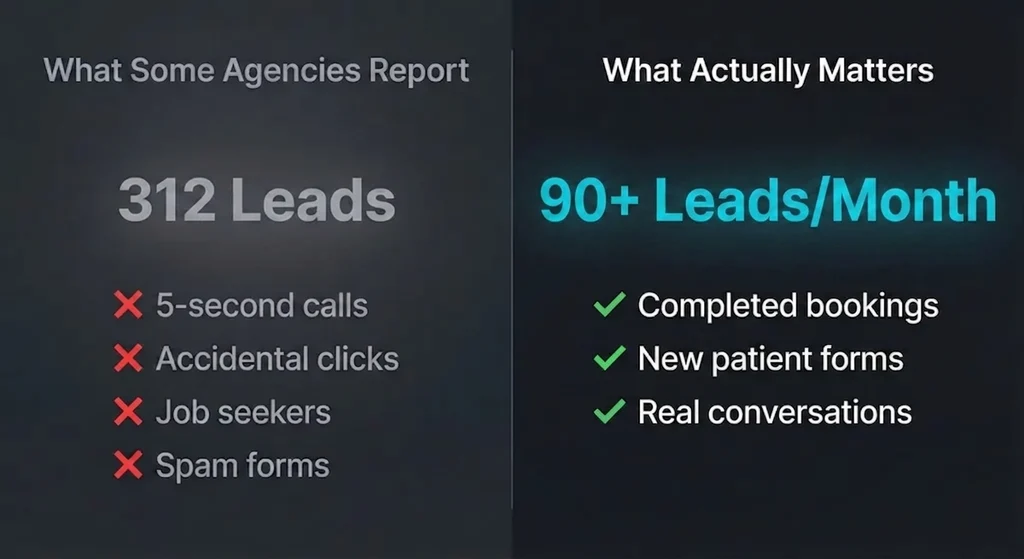
What counts as a “lead.” This is where a lot of agencies inflate their numbers. Counting every 5-second phone call, accidental clicks, or form submissions from job seekers makes your lead count look great on a report but doesn’t put patients on your schedule. Real lead cost should be based on actual patient inquiries: confirmed booking requests, completed new patient forms, and phone calls that last long enough to be a real conversation. If your agency is reporting 200 leads but your front desk only talked to 40 people, your true cost per lead is 5x what they’re telling you.
Conversion tracking accuracy. If you’re only tracking form submissions but half your new patients call instead, your “cost per lead” is artificially inflated. You’re paying for conversions you’re not counting.
Campaign structure. Broad, unfocused campaigns waste spend on low-intent searches. Tight campaign structures that match how patients actually search will always outperform a “set it and forget it” approach.
Website conversion rate. Two practices can pay the same cost per click, but if one website converts at 5% and another at 10%, the second practice pays half as much per lead. Your website’s ability to convert visitors is just as important as your ad strategy.
With those factors in mind, here’s how we got dermatology lead cost down to $27 for this Honolulu practice, counting only confirmed booking requests, the strictest possible definition of a lead.
The Starting Point: Good Practice, No System
The practice came to us already successful. Referrals had built a solid patient base, and the owner had ambitions to become one of the largest dermatology groups in Hawaii. But their previous marketing efforts had been scattered, and more importantly, there was no clear picture of what was actually driving new patients through the door.
When you can’t measure it, you can’t improve it. And you definitely can’t tell whether your lead cost is good or bad.
Step One: Track Everything That Matters
Before launching a single ad, we stood up comprehensive conversion tracking in dedicated lead-tracking and call-attribution software. Every meaningful patient action flowed through it: online booking requests, new-patient form submissions, and phone calls, each tagged back to the exact ad, keyword, and landing page that drove it. That attribution layer told us which ads were driving phone volume to the front desk, but for the headline $27 lead cost below, we count only confirmed booking requests. Phone calls and other inquiries were tracked for optimization, not padded into the lead number.
Step Two: Structure Campaigns Around Patient Behavior
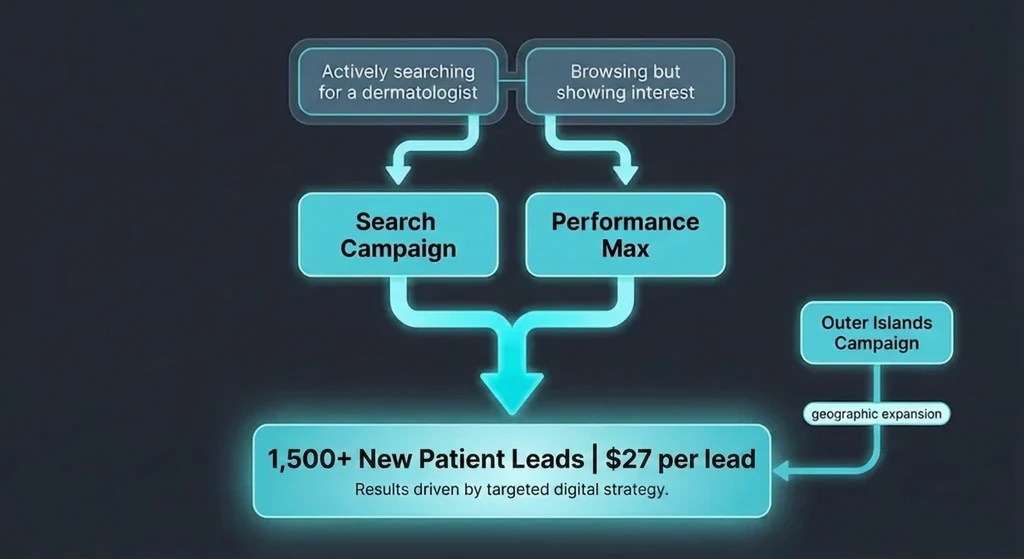
We built a multi-campaign structure designed to capture patients at different stages of their search journey.
The main search campaign targeted high-intent keywords: people actively searching for dermatologists in Honolulu and surrounding areas. These searches have clear intent, and the cost per lead reflects that value.
A Performance Max campaign expanded reach across Google’s network, capturing patients who might not have been actively searching but showed intent signals. Different campaign type, different cost dynamics.
We also launched separate campaigns targeting patients on Hawaii’s outer islands, recognizing that patients often travel to Honolulu for specialist care. Geographic targeting affects lead cost too.
The Results: $27 Per Lead, Month After Month
From January 2025 through mid-2026, the practice invested roughly $2,500 per month in Google Ads. Here’s what that investment produced:
Over that year and a half, the campaigns delivered more than 1,500 confirmed booking requests: patients who completed an online booking or new-patient form specifically to request an appointment. Every one of those bookings was verified and deduplicated in our lead-tracking software and attributed to the specific ad and keyword that drove it, so the count isn’t a best-guess estimate, it’s a clean, sourced record. Phone calls and general inquiries were tracked separately and are not included in that figure. That’s over 90 confirmed booking requests per month, consistently, for a year and a half.
The cost per confirmed booking request held steady at $26.56.
For context, dermatology lead costs can range widely depending on market, competition, and campaign quality. In competitive metropolitan areas, $50-100+ per lead isn’t unusual. In less competitive markets with well-optimized campaigns, $25-40 is achievable. This Honolulu practice landed at the efficient end of that range despite being in a market with limited population and established competitors.
What This Means for Your Practice
Your dermatology lead cost will depend on your specific market, competition, and how well your campaigns and website are optimized. But here’s what this case study suggests:
$27 per lead is achievable, even with the strictest lead definition (confirmed booking requests only), when you pair proper tracking, smart campaign structure, and a website that converts. If you’re paying significantly more for a looser lead definition, there’s likely room to improve.
Consistency matters more than spikes. This practice didn’t have one great month. They maintained a $27 average for a year and a half. That’s a system, not luck.
The tracking infrastructure pays for itself. If we hadn’t implemented call tracking, we would have missed a huge portion of conversions and made worse optimization decisions. Accurate data drives efficient spend.
Monthly budget doesn’t have to be massive. Roughly $2,500 per month generated over 90 leads. That’s accessible for most established practices.
Is Your Lead Cost Where It Should Be?
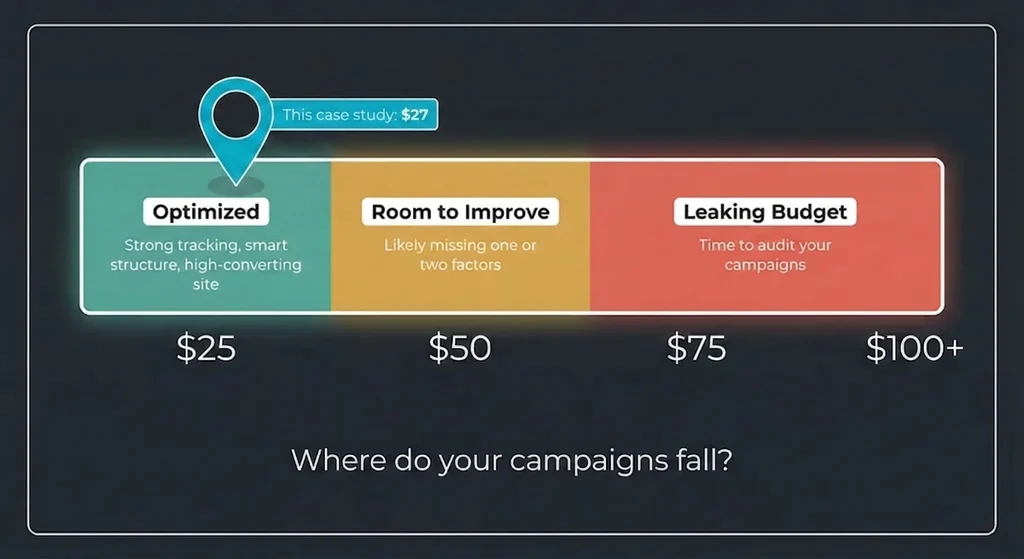
If you’re running Google Ads for your dermatology practice and wondering whether your cost per lead is reasonable, the answer depends on whether you’re tracking everything, structuring campaigns intelligently, and converting the traffic you’re paying for.
If your numbers look worse than what you’ve seen here, there’s likely opportunity to improve. If you want a second set of eyes on your campaigns, we should talk.
Ready to see results for your practice?
30-minute strategy call. Direct access to Kevin Dillon, an operator who's scaled healthcare businesses to Inc 5000. No account managers, no pitch deck, just answers.
Book a Free ConsultationMore Tips & Tricks

Construction Daily Report App Case Study: One Field Hub for Reports, Safety, and Photos
We built a daily operations app for a heavy civil contractor: daily reports, safety forms, and job photos in one place, built for bad signal and connected to Microsoft 365. Here is what we built, what 780 real reports taught us, and what this case study cannot prove.
Podiatry Google Ads Case Study: 835 Patient Actions at $26 Each
An anonymized sole-provider podiatry practice used separate Google Ads campaigns to control demand across two offices, generating 835 tracked new patient actions at a $26.06 blended cost per action.
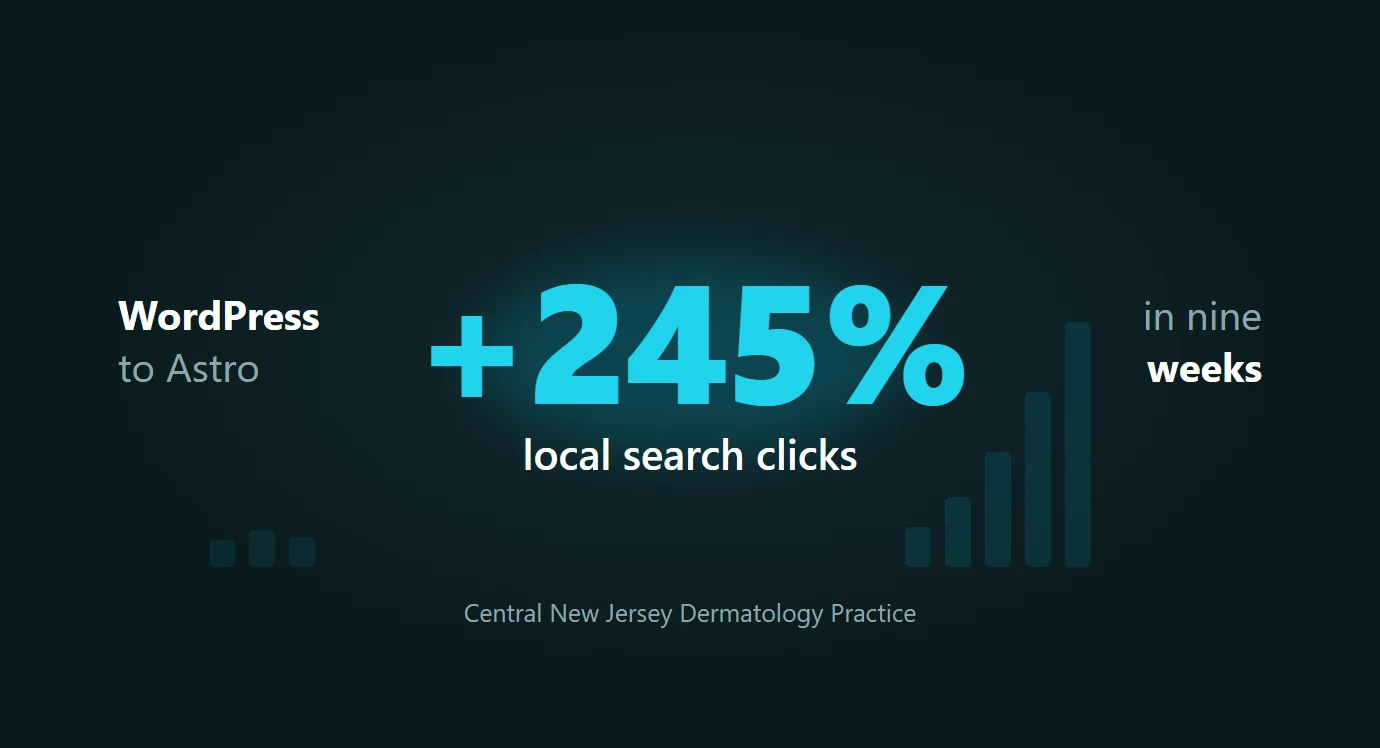
Healthcare Website Redesign: How One Practice Tripled Local Search Clicks
A central New Jersey dermatology practice was a subfolder on a WordPress domain it shared with a sister podiatry practice. Nine weeks after its redesign launched on a dedicated site, organic clicks were up 77% and local search clicks had tripled. Here is the full data from both Search Console properties.